Our Team
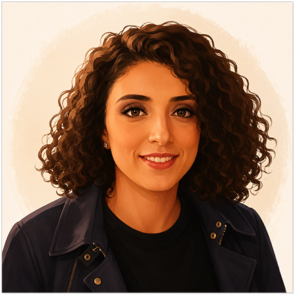
Dr. Saïda, PhD
Co-Founder
Meet Dr. Saïda, Co-Founder of Little Eagles Nest :
Saïda is a scientist, a mother of three, and the co-founder of Little Eagles Nest. Her path into early childhood education didn’t begin as a business idea. It began as a very personal search for the kind of place she wanted for her own children.
Born and raised in the south of France, she grew up surrounded by more than one culture, language, and way of seeing the world. Her passion for science eventually brought her to New York, where she came to pursue postdoctoral research in Cancer Immunology at the Memorial Sloan-Kettering Cancer Center.
Years of research taught her to ask questions, study evidence, and understand how living systems develop and adapt to the environments around them.
She never expected motherhood to turn that same curiosity toward an entirely different subject: her own children.
As a scientist, Saïda understood something most parents are never told. In the first years of life the brain is building itself at a pace it will never match again, and it builds from whatever surrounds it.
Which is why she believes the environment matters as much as anything taught within it. A child who feels safe, known, and genuinely at home, surrounded by warmth, unhurried attention, real conversation, and the freedom to explore, is a child whose brain is laying down the circuits for confidence, curiosity, and the capacity to learn. That groundwork is done long before a classroom ever asks anything of them.
This is where early childhood is so often misunderstood.
The years before kindergarten get treated as the waiting room before “real school,” and childcare as the arrangement that allows parents to work. But early childhood isn’t a smaller version of school. It is a fundamentally different thing, and it calls for a radically different approach.
Children this age don’t need academics introduced earlier. They need richer experiences to build with.
Conversations instead of screens. Real objects instead of pictures of them. Nature instead of a whole day indoors. Building, touching, experimenting, creating. Hearing rich language. Moving their bodies. Learning to solve a problem before an adult solves it for them. And enough time to become deeply, seriously interested in something.
A young child’s day may look simple from the outside: digging in the dirt, listening to a story, helping prepare food, negotiating over a toy, stopping to examine an insect. In reality, this is a child assembling an entire understanding of the world.
When Saïda went looking for a program built this way, she couldn’t find one that brought it all together: loving and attentive teachers, thoughtful (organic) nutrition, bright and stimulating spaces, meaningful time outdoors, individualized learning, room for independence and creativity, cultural inclusion, no screen time, and above all an environment where each child is genuinely known, heard, and respected.
So together with her husband, they built it.
Her approach draws on Montessori and Reggio Emilia principles, grounded in the conviction that children deserve to be treated as capable, curious individuals. Teachers observe closely, offer materials and experiences suited to the child in front of them (called provocations), and resist the urge to fill every moment with adult-directed instruction but rather let the children lead and explore. Teachers are there to guide and provide the rich environment.
Her multicultural upbringing shaped LEN as well. Different languages, foods, families, and traditions aren’t an occasional classroom lesson here, they’re part of how children learn early that difference is normal, interesting, and worth celebrating.
Her own three children have grown up within the program, and most decisions still begin with the question that started it: is this what we would want for our own children?
She hopes every child leaves LEN curious, confident, kind, and independent, because these years are not preparation for the important years. These are the important years!